Meetings that actually turn into decisions and done work
Meeting Intelligence reads a transcript, drafts the decisions and action items for you, and waits for your review before anything is official. Accept an item and it becomes a real task — not a line in a doc nobody opens again.
From recording to real work
Import a meeting — paste or upload a transcript (only with your consent; there's no path that skips that checkbox), connect your calendar so meetings sync in automatically, or let it quietly draft during a live call.
It reads the conversation and drafts what actually happened: decisions made, action items with an owner, risks raised, open questions — sorted and grouped, ready for you to check.
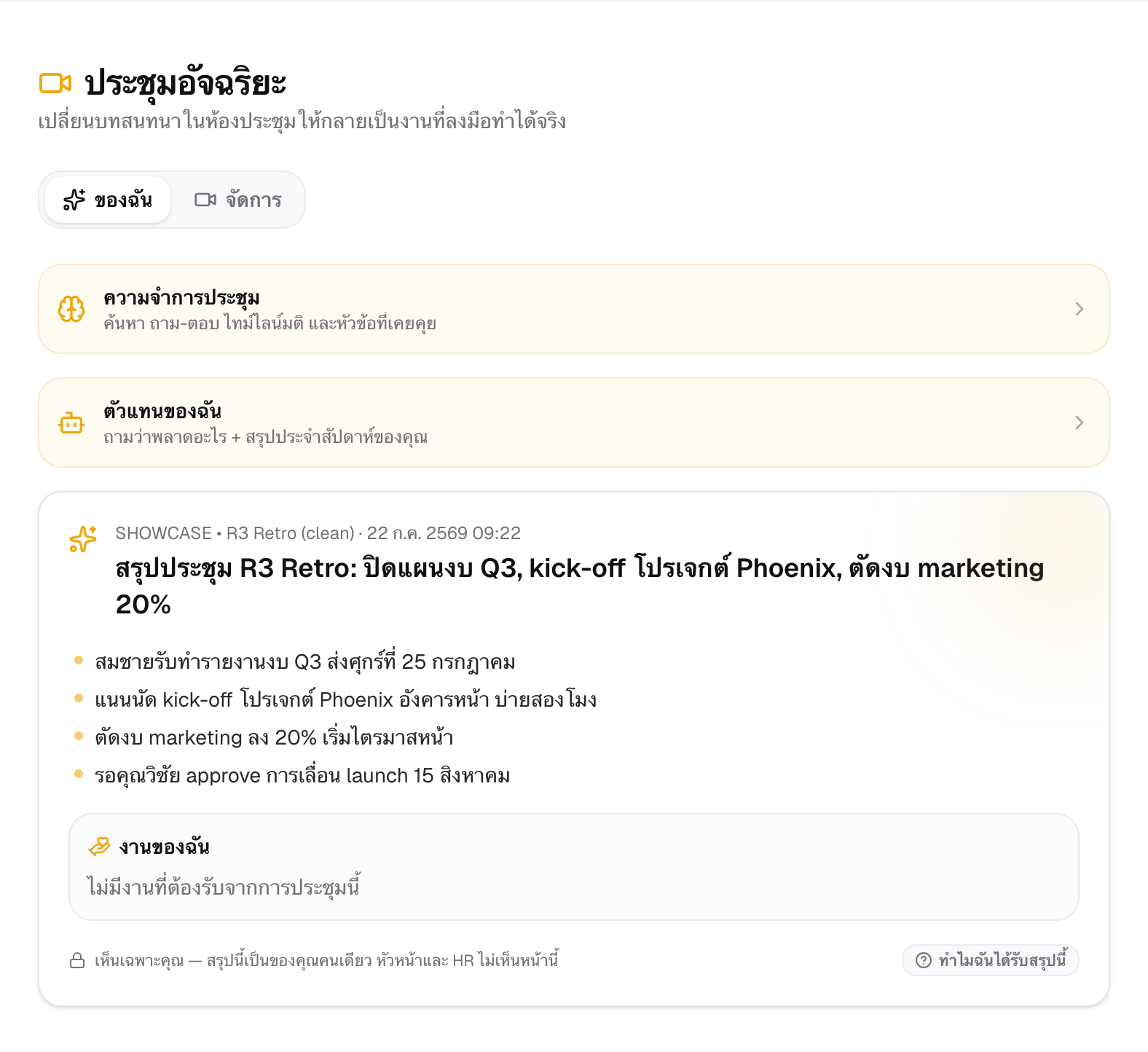
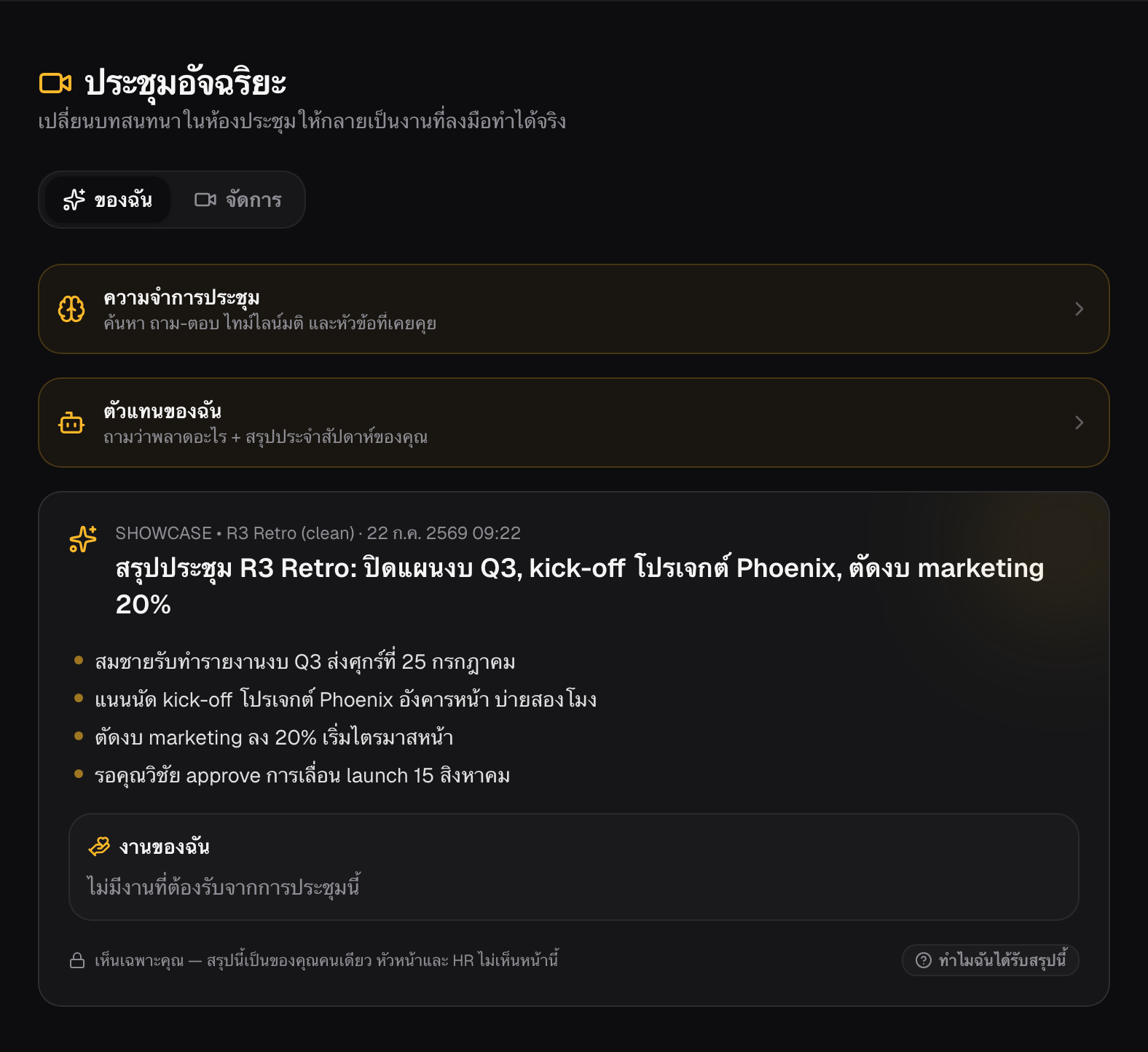
Nothing is official until you say so
- Map participants to real people first, so the right names land on the right actions.
- Process the transcript — the draft decisions, actions, and risks appear grouped by type.
- Review every single item — accept it, edit it, or reject it. Nothing downstream happens to a draft you haven't touched.
- Publish — everyone gets a personal digest, and every accepted action item becomes a real task that stays in sync: finish it there or here, and it completes in both places.
A planner that fills itself in
Need to schedule the next one? Pick a project and the planner drafts the title, agenda, and who should be there for you — every field stays editable. See real free/busy availability, pick a time, and send an actual calendar invite when you're ready — nothing sends itself.
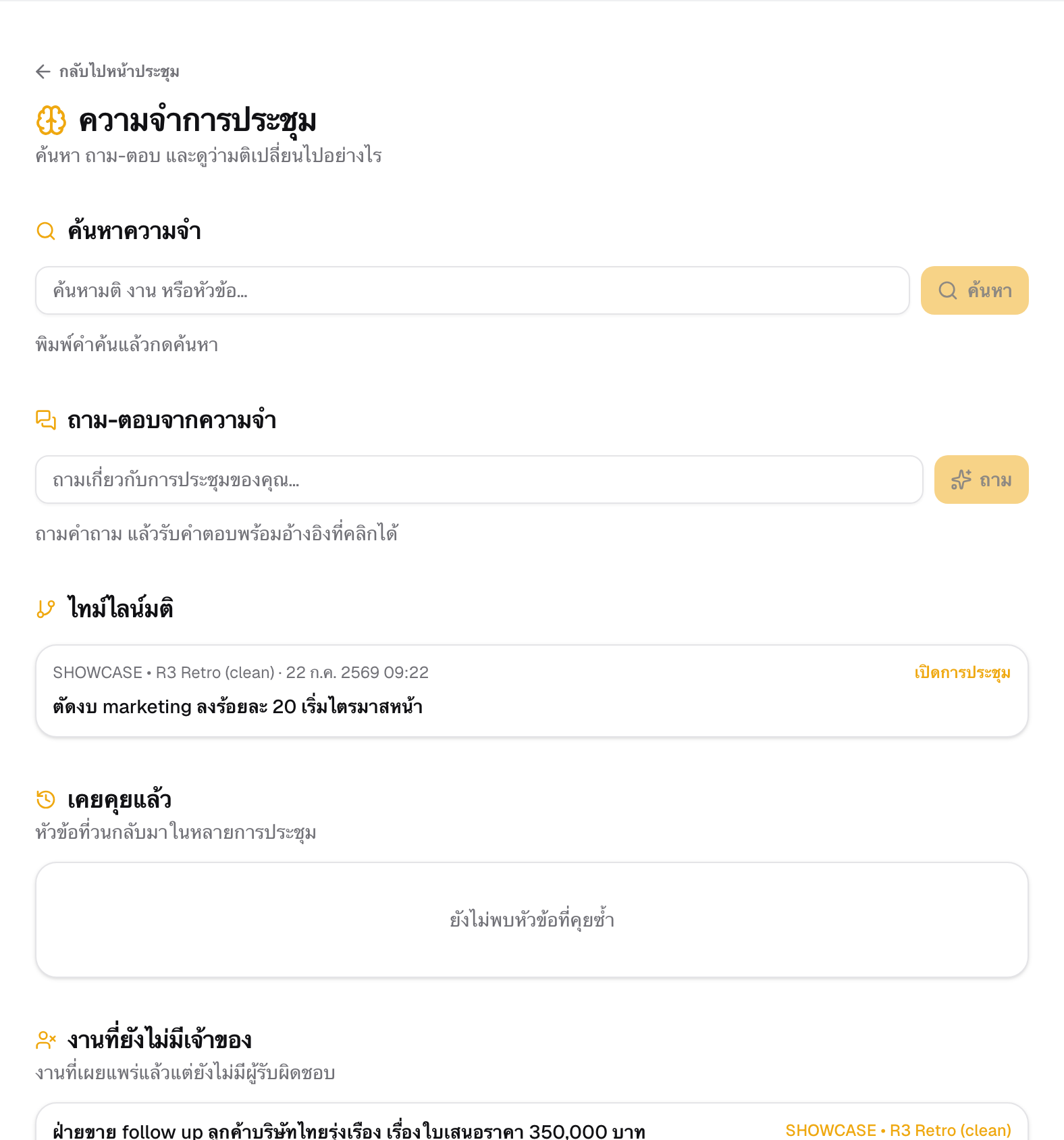
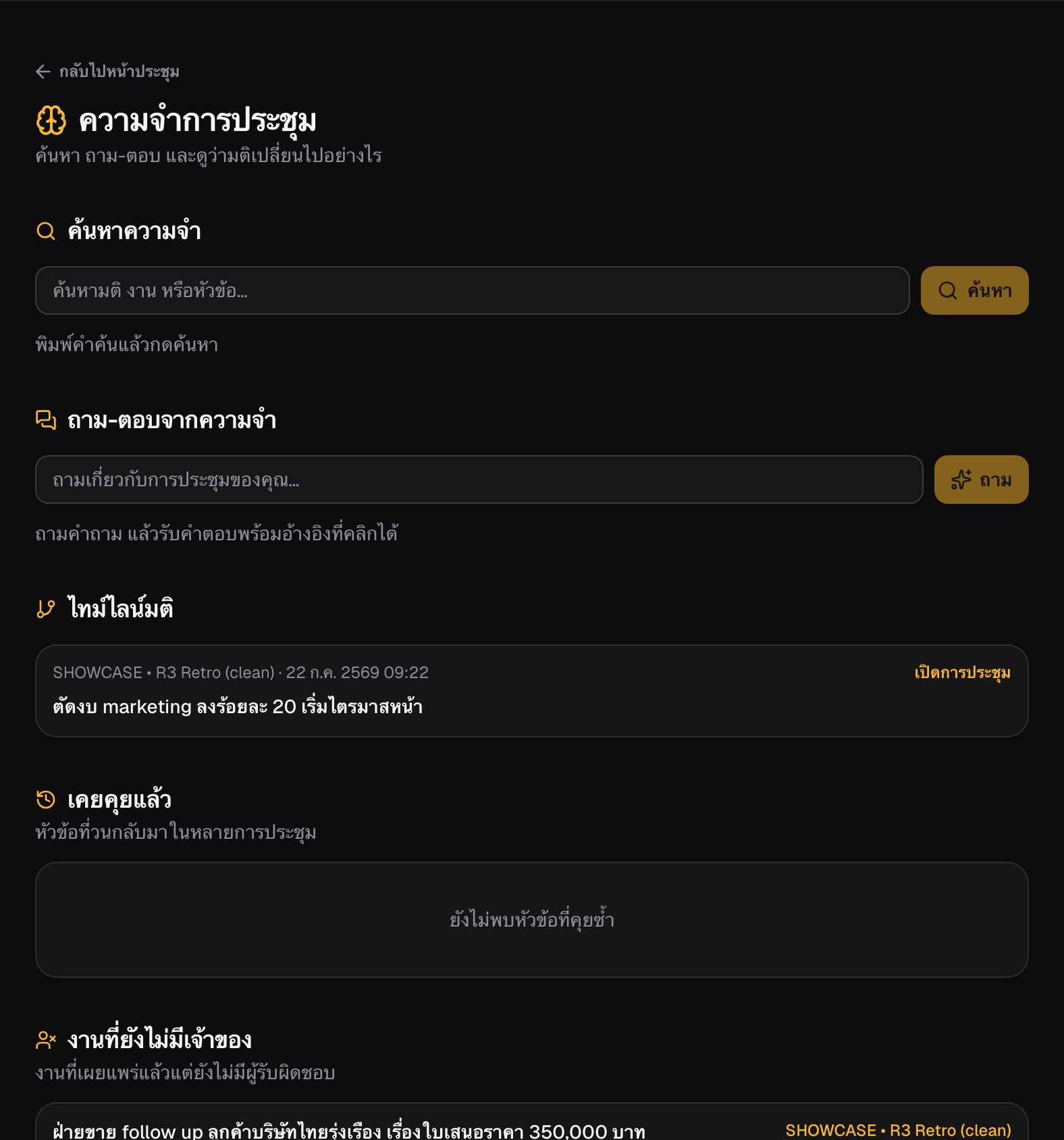
Memory that only shows you what you were already allowed to seeSearch past meetings, ask a plain question about what was decided, and get an answer grounded in the real transcript — not a guess. It flags topics you've already discussed before you spend another meeting on them, and surfaces action items that never found an owner.Your personal avatar can catch you up on what you missed and give you a weekly brief — grounded only in meetings you could already see. It never reaches into someone else's private meeting to answer you.
How to try it
- Open Meeting Intelligence — import a transcript, or connect your calendar from there.
- Open a meeting you organized — map participants, process it, and review the drafted items.
- Publish it, then check your digest and your avatar's weekly brief.
- Try the planner for your next meeting — pick a project and see it fill itself in.
Why it's different from "just a transcript"A transcript is something nobody reads twice. This turns the same conversation into decisions people can find later, actions that actually get tracked, and a next meeting that's easier to set up than the last one — while you stay the one who decides what's real.